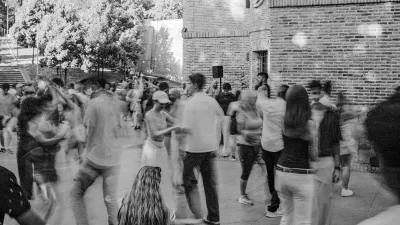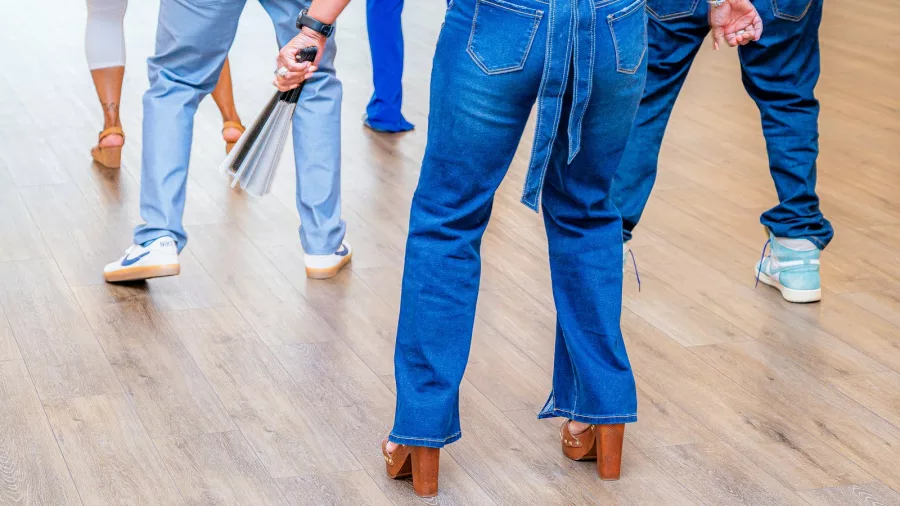
For your first Lindy Hop classes, you come in whatever shoes you have, and comfortable trainers are fine. The question comes later, for example during a swing out: your foot stays stuck to the floor while your body turns, and your knee takes the strain.
Often, it all comes down to the sole. Some grip too much, others slip too much, and after three hours at a social, comfort matters as much as glide. Before buying anything, you can also adapt a pair you already own.
The sole matters more than the shoe
Lindy Hop is full of pivots: the follow coming out of a swing out, the lead turning on the spot, both partners on the triple steps. Each pivot needs the sole of your shoe to slide for a moment, then hold again.
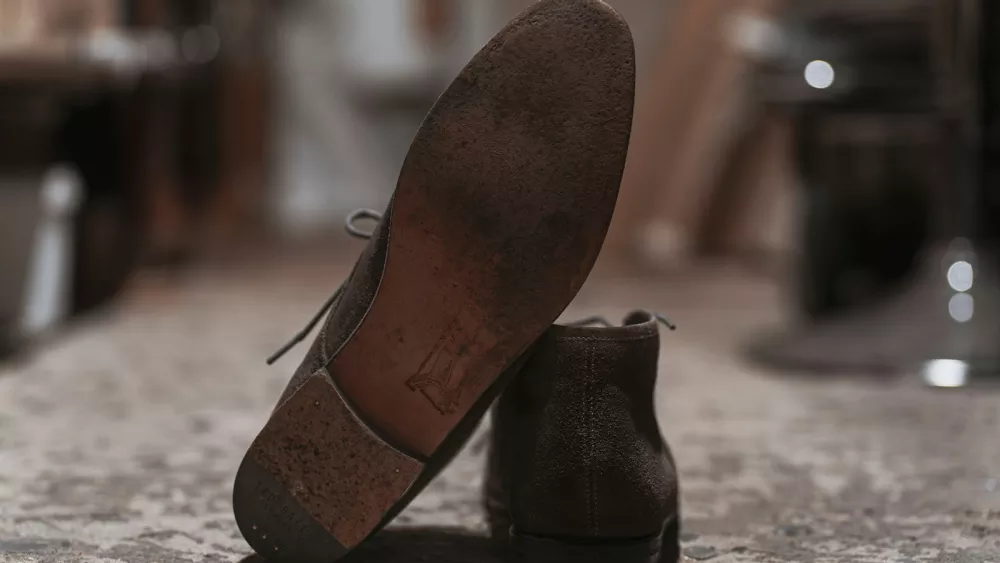
Photo: maks_d on Unsplash.
A rubber sole, like the one on most trainers, is made to grip the floor, and that grip is what holds your foot back mid-pivot. Sports shoes with a chunky tread are the least suited of all.
If your knees hurt after dancing, a sole that grips the floor too much is one of the causes worth checking.
What dance shops call a suede sole is leather buffed on the flesh side until it feels like velvet. "Chrome" describes how that leather is tanned, and most suede dance soles are chrome-tanned anyway, so it isn't a separate category. The difference that matters for dancing is between that velvety surface, which slides enough to turn while braking a little, and the smooth leather of a smart shoe, which slides more. Some dancers like smooth leather, but it can get awkward on a waxed floor.
A guide from the Los Angeles swing scene puts it simply: leather soles are best, rubber grips too much to spin on.
The floor matters too: many socials in French-speaking Switzerland happen on wood or dance-school parquet, where suede works well. On concrete or tiles it wears quickly, and it doesn't like water, so for summer socials outdoors you're better off with another pair.
The same pair can work well in one venue and be too slippery in another, so before you decide, it's worth trying it on more than one floor.
Why avoid high heels at first?
You will see heels on swing floors, and some people dance very well in them. For beginners, though, they make the basics noticeably harder to learn.
Lindy Hop is danced low, with soft knees and most of the weight on the balls of the feet, which is where triple steps, kicks and the rock step push off from. A high heel shifts the weight even further forward and makes your footing less stable when a turn goes wrong. Thin heels can also catch between floorboards, and on a busy floor, a foot stepped on by a thin heel hurts more.
The usual compromise in swing is a short, wide heel of a few centimetres. Plenty of shoes sold for swing dancing are made that way, and some hide a small wedge inside. If you like heels, that's a good place to start.
Comfort before style
A social often lasts three or four hours and a festival has several in a row, so three things count if you want to last that long.
Cushioning under the ball of the foot. Lindy Hop is bouncy, and the front of the foot takes that impact all evening. A thin, hard sole tires the feet quickly, and a cushioned insole from a pharmacy can already help, as long as it leaves your foot enough room.
Fit. The shoe has to hold your foot: if the heel lifts out when you rise onto your toes, the foot slides around inside and blisters come quickly, which is why laces or a strap help. Try shoes on in the afternoon, when feet are a little bigger, with the socks you dance in.
Flexibility. The sole has to bend where the toes bend: a shoe that is too stiff makes it hard to rise onto your toes.
Starting with what you already have
For the first few weeks, there's no need to change anything. A smooth, flat sole is enough: old trainers that have lost their tread, leather-soled shoes or flat canvas sneakers. A worn sole is fine too, as long as the shoe still holds your foot.
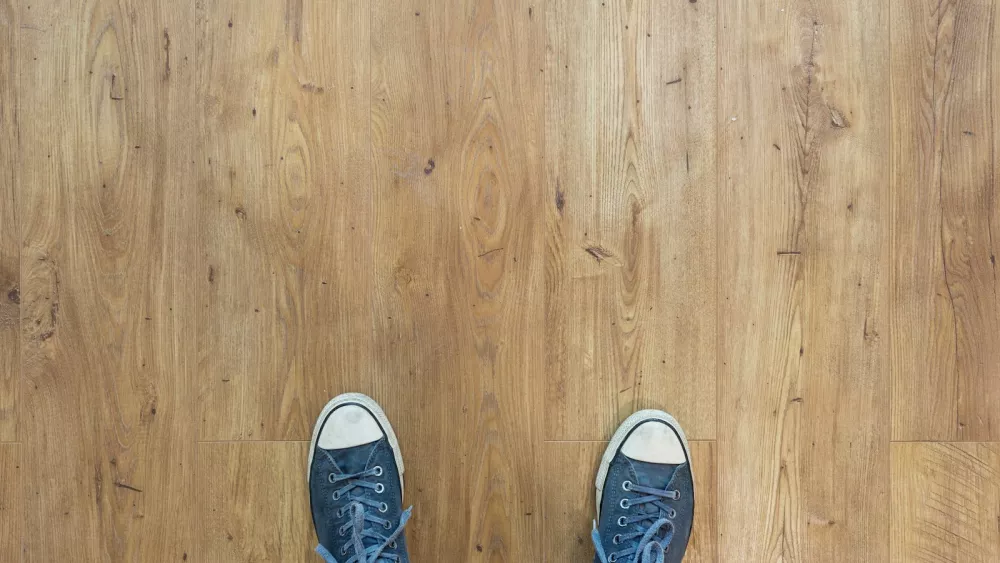
Photo: Neven Krcmarek on Unsplash.
If your shoes grip too much, you can take a flat, comfortable pair to a cobbler and have a layer of suede glued onto the sole. A careful job lasts a long time, and an edge that peels can usually be fixed with a little shoe glue. Dance shops also sell stick-on suede pads, handy for trying suede before spending more.
A suede sole gets dirty quickly outside and loses its glide, so keep it for the floor: carry the pair in a bag and put it on at the venue.
What to buy, depending on where you are
- You're just starting. Keep a comfortable flat shoe with a smooth sole, and change nothing for a few weeks.
- You dance every week and your shoes stick. Have a cobbler glue suede onto a pair you like, or test stick-on pads first.
- You want one pair for the street and the floor. A dance sneaker such as Fuego, after checking how it turns on the floor you dance on most.
- You like the vintage look. A flat with a hidden wedge such as Charlie Stone, or a shoe designed for swing such as Swivells or Aris Allen. Either way, check the sole of the model before ordering.
The brands
Some links in this article are affiliate links. If you buy through them, SwingHop earns a commission that helps pay for the site, at no extra cost to you. The Fuego and Charlie Stone links also give you 10% off, or you can use the code SWINGHOP10 at Fuego and SWINGHOP at Charlie Stone if you go to their site directly.
Fuego is for anyone who wants one pair for the street and the floor. These dance sneakers look like ordinary trainers, but their sole is made to slide and grip at once, with two slightly raised pivot points. Most models cost 150 to 165 dollars. See the Fuego models.
Charlie Stone is mostly for those who like the vintage look. The brand makes women's shoes inspired by the 1920s to the 1950s, mostly flats with a small hidden wedge, in suede or leather. It no longer presents itself as a dance label, but says many people dance in its shoes. Product pages don't always state the sole material, so if you plan to dance in them, check it before ordering. Prices run from about 129 to 169 dollars. See the Charlie Stone collection.
Aris Allen was started in the late 1990s by dancers who couldn't find the right shoes for Lindy Hop. The range mostly uses suede soles, which the brand presents as the way to spin while protecting the knees, with smooth leather on its formal shoes.
Swivells is the only European brand on this list: designed in Paris, handmade in Spain, with Lindy Hop and Balboa collections. Its derbies have a neolite sole, a hard rubber compound made for controlled glide, and cost around 189 euros.
Looking after a dance sole
With use, suede flattens, gets shiny and slides more, which some dancers quite like. When the sole gets too slippery, a wire suede brush lifts the fibres and usually brings the grip back. Keep your shoes dry and let them air after a social.
Where to dance in French-speaking Switzerland
The best test is still a social: you quickly find out whether a pair turns well on that venue's floor. Socials and taster classes near you are in the swing events calendar for French-speaking Switzerland. If it's your first social, our guide to what actually happens at a swing social explains how the evening works, and the Lindy Hop moves catalogue has the basic steps on video.