Our piece on your first swing social covers asking in two lines: anyone can ask anyone, and a no usually says nothing about your dancing. This article goes into the detail: how to ask, how to say no, and what to do with a no.
There's no rulebook shared by every social. Some associations in Romandie have written these habits down, though. The charter of Winter Swingtime, the December festival run by Swingtime Lausanne, sums up the essentials in a few lines, and this article leans on it heavily.
Asking for a dance
To ask, you walk up to the person, make eye contact and say, "Would you like to dance?" It's a real question, asked out loud, and no is a possible answer. Holding out a hand is fine too, but pulling someone onto the floor by the arm leaves them very little room to say no.
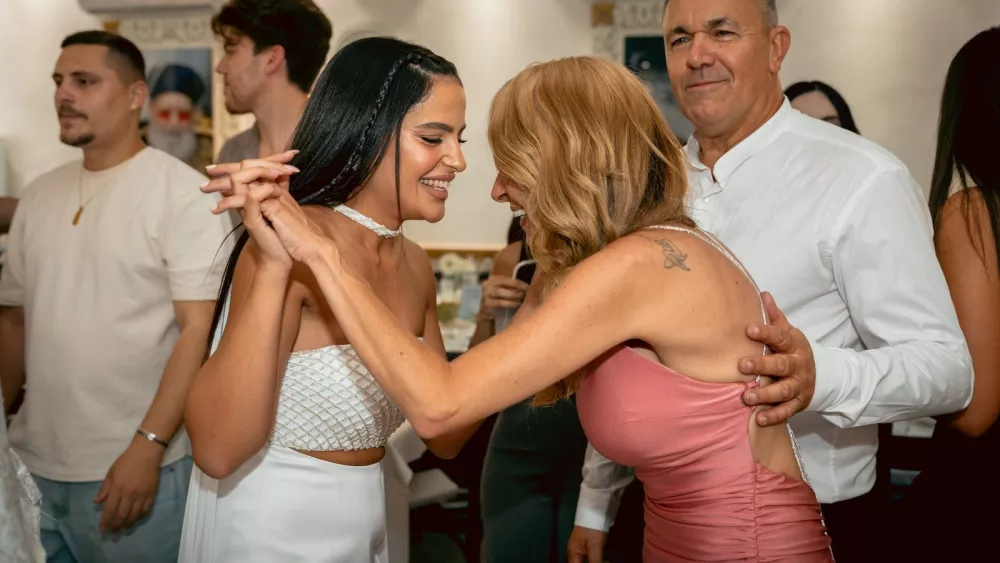
Photo: Shoham Avisrur on Unsplash.
The best moment is between songs, when the music stops, couples split up and everyone looks for someone for the next one. Someone who's drinking, changing shoes or deep in conversation may well say yes, or may prefer to finish what they're doing.
Then there's the question of role. Lindy Hop has a lead and a follow, and you can't tell by looking which one someone prefers. The charter asks you not to assume someone's role from their gender and, when you ask someone to dance, to ask which role they'd like. Not everyone asks, but when you don't know which role someone dances, a quick question right after the yes saves a confused start, something like "Do you want to lead or follow?" Some dancers learn both roles. In Lausanne, Swingtime lets you sign up for classes as a leader, a follower or a "switch". Switches get their role at the start of each class, depending on the balance of the group.
As for level, there's no rule. A beginner can ask someone who's been dancing for ten years, and the other way round. The charter encourages dancing with everyone, because that's how people learn and how the community grows stronger.
Saying no
You're allowed to turn down a dance. The charter puts it plainly: everyone has the right to say no, without justification and without pressure, to a dance and even to a move in class. That applies to everyone, whatever their role, their level, or how many times they've already said yes that night.
A short sentence is enough, like "No, thanks", "Not this one" or "I'm taking a break". There's no need to invent an excuse, since you don't owe anyone a reason. A smile and a thank you are plenty.
"Maybe later" is a small promise. If you say it, it's nice to go back to that person a few songs later, as our first-social piece suggested. If you don't mean it, a plain no saves them from waiting for nothing.
Can you dance with someone else right after saying no? Nothing in the charter rules it out. The person you said no to might notice, and it might sting a bit. But you can have reasons that are nobody else's business: a friend you haven't seen in months, a song you'd already promised, or an earlier dance with that person that didn't go well.
Finally, a yes only covers the dance. The charter says it in one sentence: a yes to a dance is a yes to one dance only, and it implies nothing more. Not a second dance, not a drink at the bar, not a phone number.
Taking no for an answer
A "sure" or a "no worries" is all it takes. There's no need to ask why or to push, and no point hovering next to the person until the next song: there are plenty of other partners in the room.
You don't necessarily know the reason for a no, and it often has nothing to do with your dancing. That's worth remembering when you're starting out and tempted to keep count.
If the same person has already said no once that evening, it's often simplest to leave it to them to come and ask you. Repeated refusals don't necessarily mean you're a bad dancer. Sometimes they come from a previous dance that was too rough, a hold that was too tight or corrections nobody asked for. If you recognise yourself in one of those, it's worth keeping in mind for your next dance.
You can still say no during the dance
The yes at the start doesn't cover everything that follows. The charter says so: if a move hurts or bothers you, tell your partner straight away. It doesn't take a speech, "looser, please", "slower" or "no dips" is enough.

Photo: Cord Allman on Unsplash.
If it really isn't working, you can also stop before the song ends, with a simple "I'm going to stop here, thanks".
According to the charter, aerials, the moves where one partner leaves the ground, don't belong on a social floor. They're for practice sessions, or for jams and performances where the technique, the safety precautions and your partner's consent are all in place.
The same goes for advice: the charter welcomes feedback when it's asked for and kind, in class and not at a social.
When something goes wrong
Some situations go beyond clumsiness. Someone who keeps pushing after being turned down, makes inappropriate comments, keeps holding someone too close after a "looser, please", or follows a person from one end of the room to the other. At that point it's no longer about etiquette, and you don't have to deal with it alone.
That's when you talk to the organisers. During Winter Swingtime, specific team members are there to listen to the people affected and to witnesses, in confidence. In Geneva, the terms and conditions of Geneva Swing say teachers and organisers make sure everyone treats each other with respect, and ask students to report any harmful behaviour. At a smaller social, you can ask at the door who's running the night.
If you're a witness, you don't need to do anything dramatic. Going over and asking the person if they're OK is a first step. And if they want, you can go with them to find the organisers.
For your next social
The swing dance calendar for Romandie lists socials in Geneva, Lausanne, Fribourg and nearby. Some start with a taster class, which is a good place to ask someone to dance for the first time.
Sources
- Winter Swingtime: charter (in French): the right to say no without justification or pressure, a yes covers one dance only, asking the role when inviting, dancing with everyone, feedback only when asked and in class, telling your partner if a move hurts, adapting your dancing to the space available, aerials kept for practice and accepted in a jam or performance under conditions, designated team members who listen in confidence
- Swingtime Lausanne: important information (in French): Lindy Hop class sign-up as follower, leader or switch, with switches given their role at the start of class depending on the balance of the group
- Geneva Swing: terms and conditions (in French): teachers and organisers ensure mutual respect, students report any harmful behaviour